
Debt Validation Letter Template
A Debt Validation Letter makes sure that a debt collector can confirm that a debt is real and legally owed. This protects individuals from false claims and mistakes from scammers and creditors.
Trusted by 3,164 users.
How did the creditor or debt collector initiate contact with you?
Fill forms in a few steps
Save, print & download
Done in 5 minutes
What is a Debt Validation Letter?
A Debt Validation Letter is a formal request you send to a debt collector to confirm that a debt is accurate and legally owed from a loan or a repayment agreement that is being claimed by a debt collector.
This letter protects you from errors, identity theft, or attempts to collect a debt you don’t recognize. It requires the collector to provide details like the original creditor’s name, the amount owed, and supporting documentation.
If the collector is not able to validate the debt, they must stop collection efforts. Sending this letter is a key step to protect your credit and avoid paying money you might not owe.
Debt Validation Letter Sample
It’s important to know how this document is structured before creating your own. Go over the sample Debt Validation Letter PDF below to find out what to include in your document.
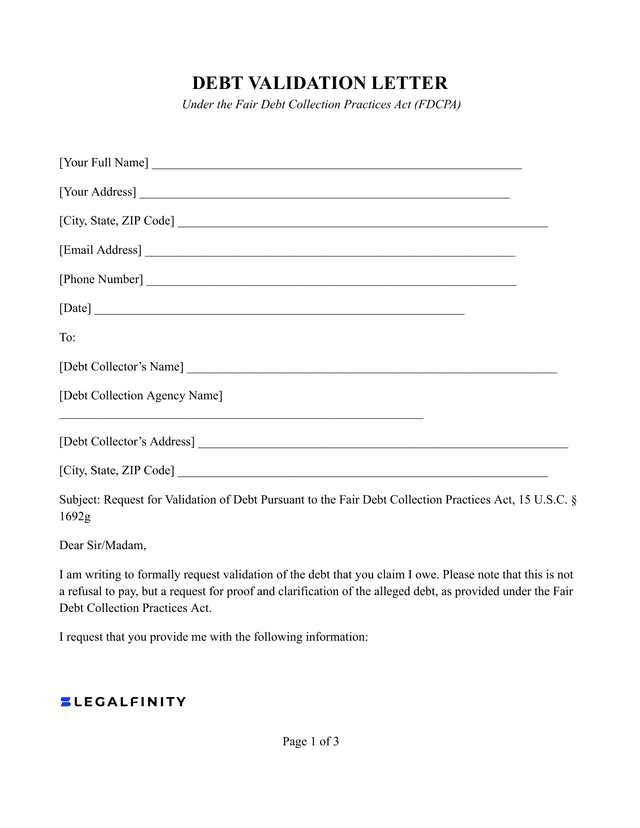
How To Write a Debt Validation Letter
It’s vital to write your Validation of Debt Letter carefully. A well-prepared letter will better protect your rights and help you avoid paying a debt you don’t owe.
Follow these steps to write your document:
- Include your contact details: Write your full name, address, and phone number at the top of the letter.
- Add the date: Include the date you are writing the letter.
- Mention the debt collector: Add the name, company, and address of the debt collector who contacted you.
- Write a subject line: Draft a clear subject like “Debt Validation Request” or include the account number mentioned in the notice.
- State why you’re writing the letter: Explain that you are requesting validation of the debt under the Fair Debt Collection Practices Act (FDCPA).
- Request proof: Make it clear you expect proof of debt in writing before any future collection actions are taken. If this is not respected, they will be in violation of 15 U.S. Code §1692d.
Once you’ve finished drafting the letter, make a copy of the letter and the mailing receipt for your records.
Use our Debt Validation template as a reliable foundation to help you create your letter with ease. You can then have a professional review it to make sure it’s legally sound.
How To Send a Debt Validation Letter
Sending your Letter of Debt Validation correctly is another key step for confirming a debt. Follow these steps to make sure your letter is received and documented properly:
- Print your letter: After writing it, print a clean and readable copy.
- Sign the letter: Add your signature before sending it.
- Use certified mail: Go to the post office and send the letter using certified mail.
- Request a return receipt: Ask for a return receipt to confirm that the debt collector received your letter.
You can then track the delivery and wait for your response.
Debt Validation Letter After 30 Days
You have the right to request debt validation within 30 days of first being contacted by a debt collector (§1692g). After that time frame, your request can still be sent. However, certain things are different.
If you send a Debt Validation Letter after the 30-day window:
- The collector is not legally required to respond.
- They can continue collection efforts unless you dispute the debt in another way.
- You may still ask for details, but they are not required to pause collection activities.
Even with this in mind, sending a letter late can still be useful to document your concerns or dispute the debt.
To protect your rights, always try to send your letter within 30 days; it’s also a good idea to understand the statutes of limitation on debts to understand all your rights.
Try Legalfinity Now
Instant and complete access to our entire library of legal forms
Edit, download and print in PDF and Word format from any device
Save time and money on legal document creation